Green-Yellow-Red: How Visual Cues Improve Task Completion
Why a glance beats a notification
The average knowledge worker checks the time dozens of times per day. Each check is a small interruption: you read a number, you do a little math ("how much time is left?"), and you decide whether to keep going. That calculation, repeated hundreds of times, is a quiet tax on your attention.
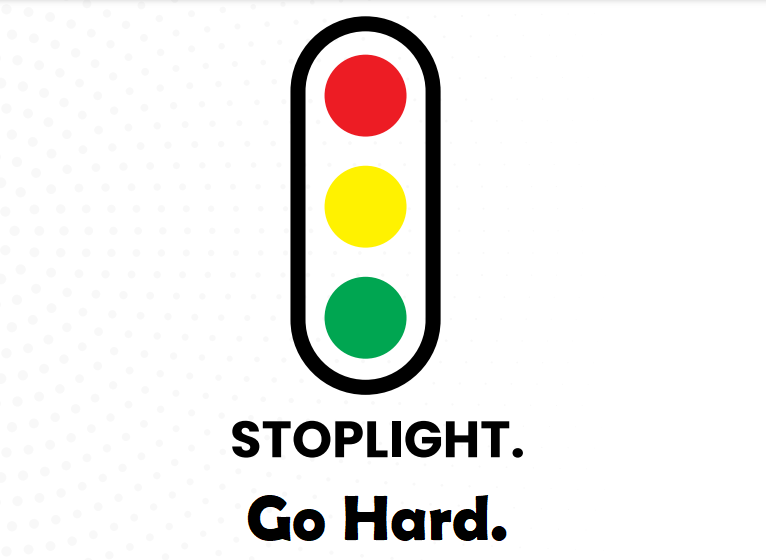
A visual cue removes the calculation. A green light means go. A yellow light means wrap up. A red light means stop. You do not need to read anything, do any math, or make any decision. The meaning arrives in a fraction of a second, before your conscious mind even engages.
This is not a productivity gimmick. It is how traffic systems have worked for over a century, and for the same reason: when people are moving fast and cannot afford to stop and think, a color signal is faster and more reliable than text.
The attention cost of checking the clock
Research on attention switching — sometimes called "task switching" or "context switching" — consistently shows that even tiny interruptions carry a cost. A 2001 study by Joshua Rubinstein and colleagues found that switching between tasks cost participants several seconds of refocusing time, and that those costs compounded across a workday.
Checking a timer is a smaller switch than checking email, but it is a switch nonetheless. You were thinking about your work; now you are thinking about the time. The visual cue approach keeps you thinking about your work and lets the time information arrive peripherally.
How the three-phase signal works
The green phase is your deep-work window. You know you have time, so you can commit to the task in front of you without monitoring the clock. This is where the real work happens.
The yellow phase is a warning. It tells you that the end is approaching — not here yet, but close. This is your cue to start wrapping up: finish the current thought, save your work, note where you are. You are not stopping yet, but you are preparing to stop.
The red phase is the stop. Time is up. You stop. The discipline of stopping on red — not "in a minute," not "after this one thing" — is what makes the whole system work. If the red light is negotiable, the green light loses its meaning, because you no longer trust that the time is real.
Why this beats a countdown timer
A countdown timer tells you the exact number of minutes remaining. That sounds more precise, but precision is not the goal. The goal is to keep your attention on the work, not the clock. A countdown invites clock-watching: "only 12 minutes left, only 11, only 10." A traffic-light cue gives you the information you actually need — am I in the zone, am I wrapping up, or am I done — and nothing more.
The less time you spend thinking about time, the more time you spend doing the work.
Building the habit
The first few times you use a visual cue system, you will still want to check the clock. That is fine. Within a week, most people stop checking, because they learn that the cue will tell them what they need to know. The system earns your trust by being reliable: green always means go, red always means stop.
Once you trust the cue, you get your attention back. The clock stops being a thing you manage and starts being a thing that manages itself.